A boutique software engineering firm, building in the open since 2020.
We started Leanware because we kept watching good companies get poorly served by the two shapes available to them: consultancies that wrote decks but could not build, and engineering shops that could build but never understood the business. We are trying to be the third shape. A small, AI-native firm where the senior engineer on your discovery call is the same person writing your code.
Trusted by great companies.
-
 Notary.io
 -
 ElephantCPA
 -
 Docbraces
 -
 Groundlight
 -
 Plannerd
 -
 GloFlow
 -
 Asana Rebel
WHY WE BUILT THIS
Leanware exists because we got tired of watching software fail in predictable ways.
Most of us came from product teams or engineering shops before Leanware. We watched the same thing happen over and over. A consultancy would land a discovery engagement, ship a slide deck full of recommendations, and leave the client to find someone else to build them. A staff-aug shop would land an engineering engagement, ship code against a spec nobody had pressure-tested, and leave the client with a system that worked exactly the way the brief said and exactly the wrong way for the business. Both engagements were sold as wins. Neither was.
The gap was structural. The person who understood the business was not the person who understood the code, and the handoff between them is where the work fell apart. We started Leanware in 2020 to collapse that handoff. One team. Same people in discovery and in delivery. Business-process work and engineering work in the same heads, not in adjacent firms talking past each other.
Five years in, that posture has held up. The lines we run are different shapes now, AI agents and AI product builds and dedicated teams, but the operating principle is the same one we started with. The senior engineer in the discovery call is the senior engineer in the build. We are still small on purpose because that is the part that matters.
WHAT WE BELIEVE
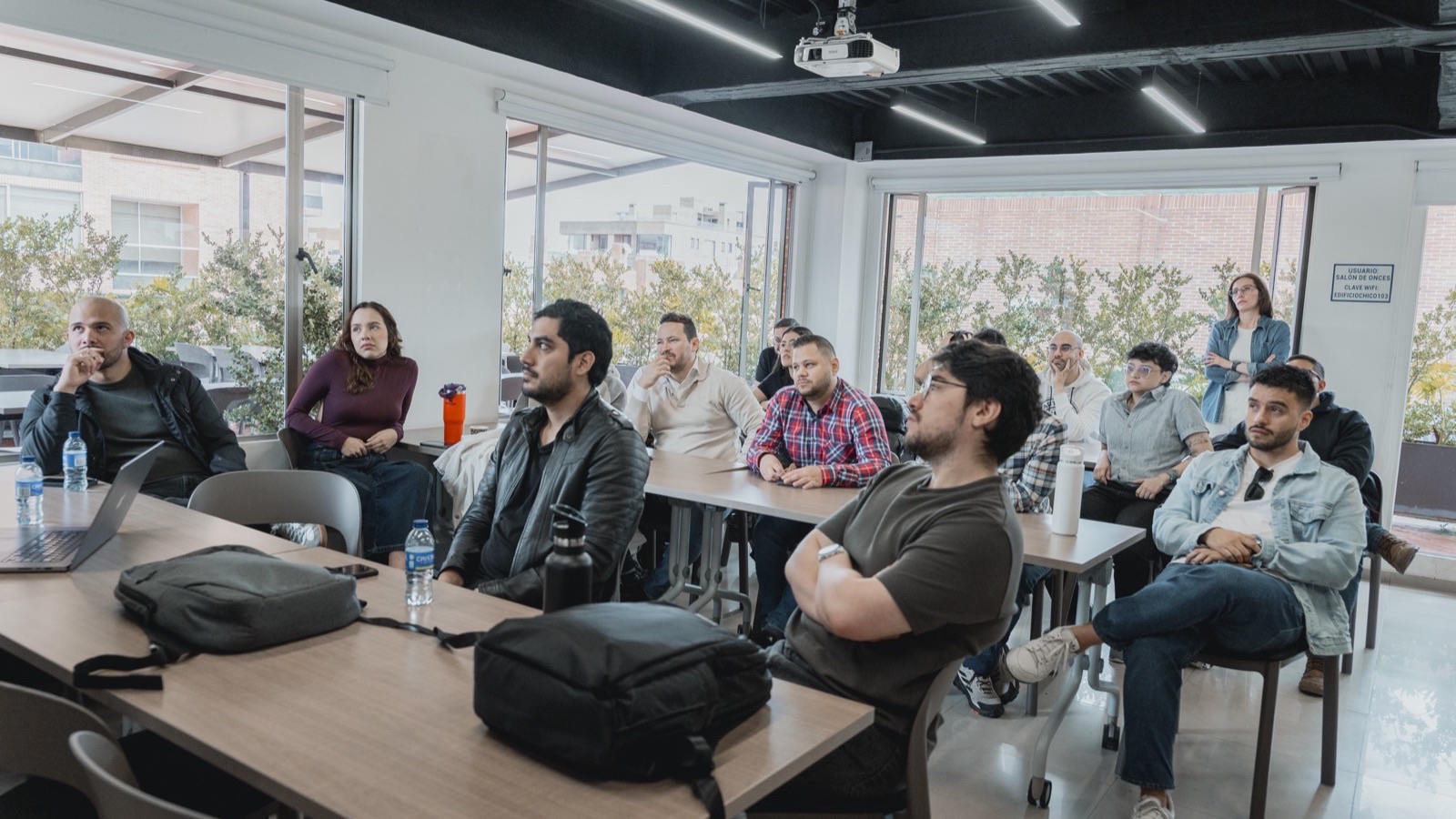
A few things we hold, stated plainly.
These are the working beliefs that shape how we hire, how we scope, and how we talk to the people we work with. They are not values posters. They are how we actually argue when a call gets hard.
-
Honesty over polish.
We would rather be unflattering and right than flattering and wrong. When the data does not support the conclusion, we say so on the call, including when that costs us the engagement. The discipline shows up in our case studies: outcomes are measured or they are not claimed, and we have walked away from cases that did not survive that test.
-
The person who scopes the work does the work.
No discovery-to-delivery handoff between separate teams. The senior engineer who runs your scoping call is the same senior engineer accountable for the system that ships. We picked this posture because every project we have seen fail badly has failed at that handoff, and we have not found a way to make it fail less.
-
AI fluency is the baseline, not a premium tier.
Every engineer at the firm ships LLM-based features as part of normal engineering work. There is no AI specialist team you have to schedule into the engagement separately. The same person picks the model, writes the prompt, builds the eval harness, and ships the deterministic code around it. We hire and train for that, and it is part of what we mean when we say AI-native.
-
Boutique on purpose.
We could grow faster than we do. We choose not to. Staying small is what lets the senior people stay in engagements rather than getting pulled out to run a sales pipeline or manage a bench. The tradeoff is real: we cannot take every engagement that comes in, and we say no to work we would have to staff with people you have not met. We have found that constraint to be load-bearing, not limiting.
THE PEOPLE BEHIND IT
A few of us are listed here. The rest you will meet in person.
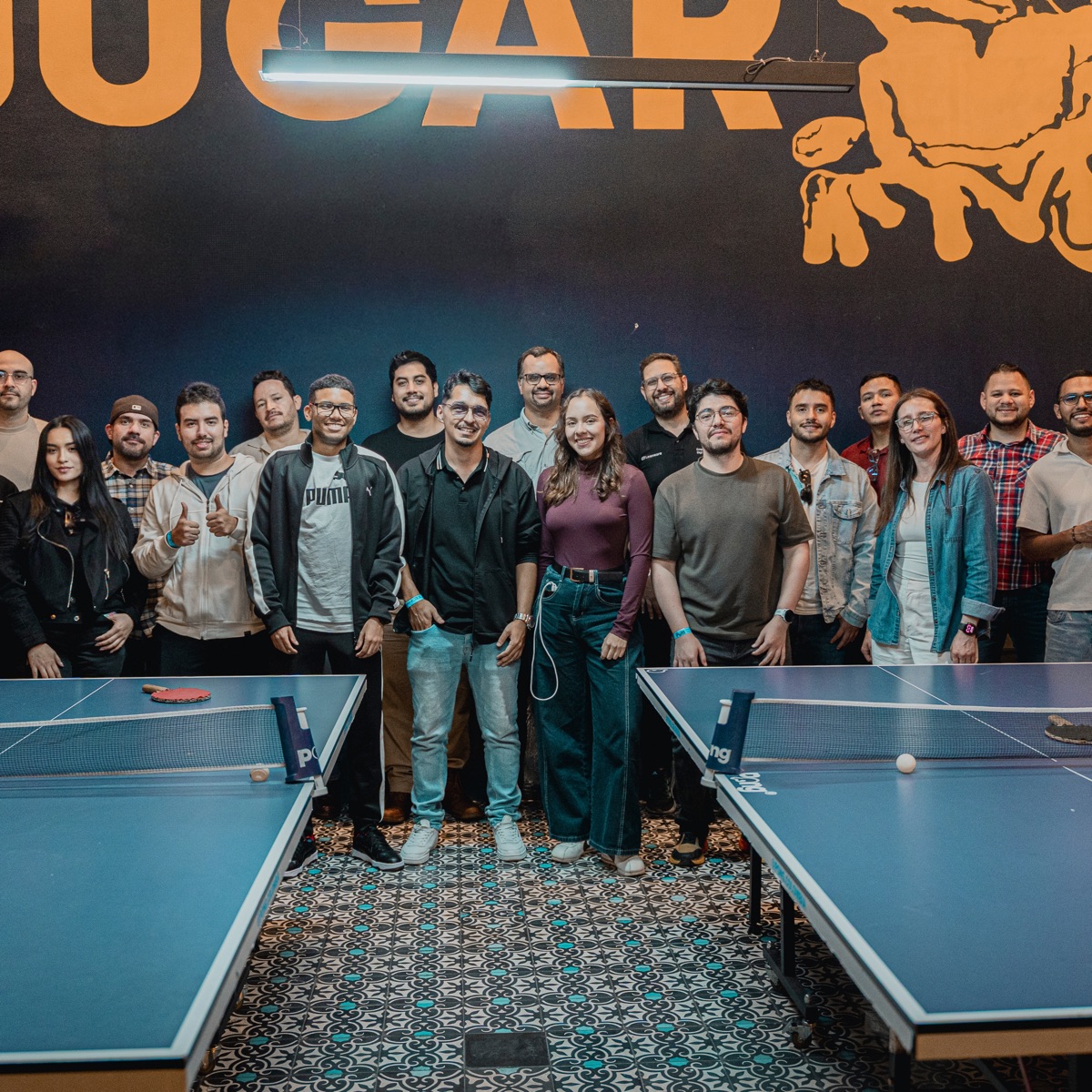
Leanware is small enough that you will meet most of the team in the first few weeks of an engagement. The nine below are the people you are most likely to interact with across discovery, scoping, and the build: the founders, the COO, the senior engineers who carry the technical bar, and the delivery, design, and QA leads you work with through to launch.
-
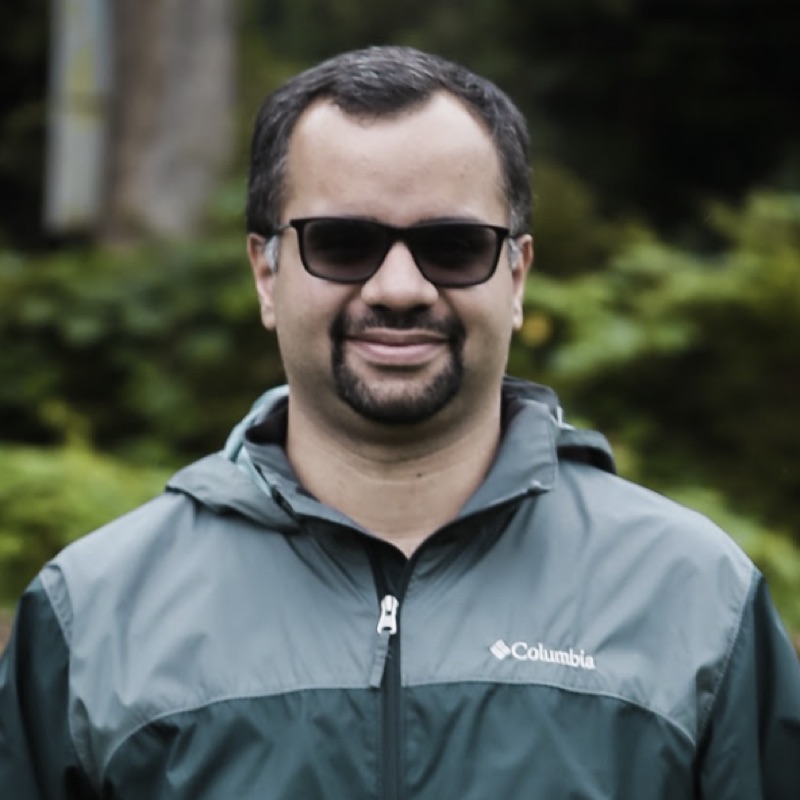
Carlos Martinez
Founder and CEO
-

Jarvy Sanchez
Co-Founder and CTO
-
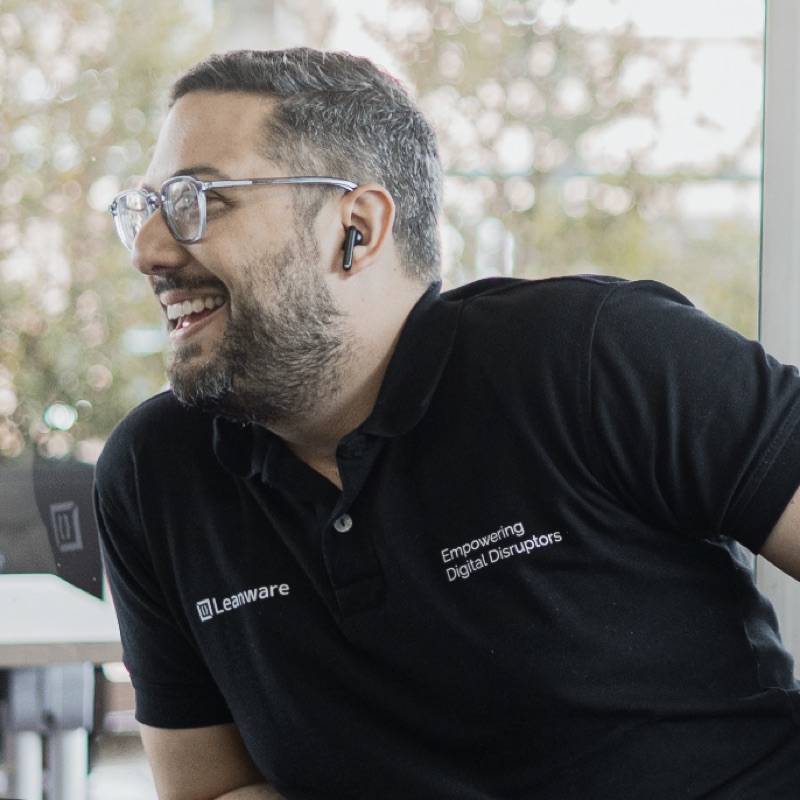
Jose Barboza
COO
-
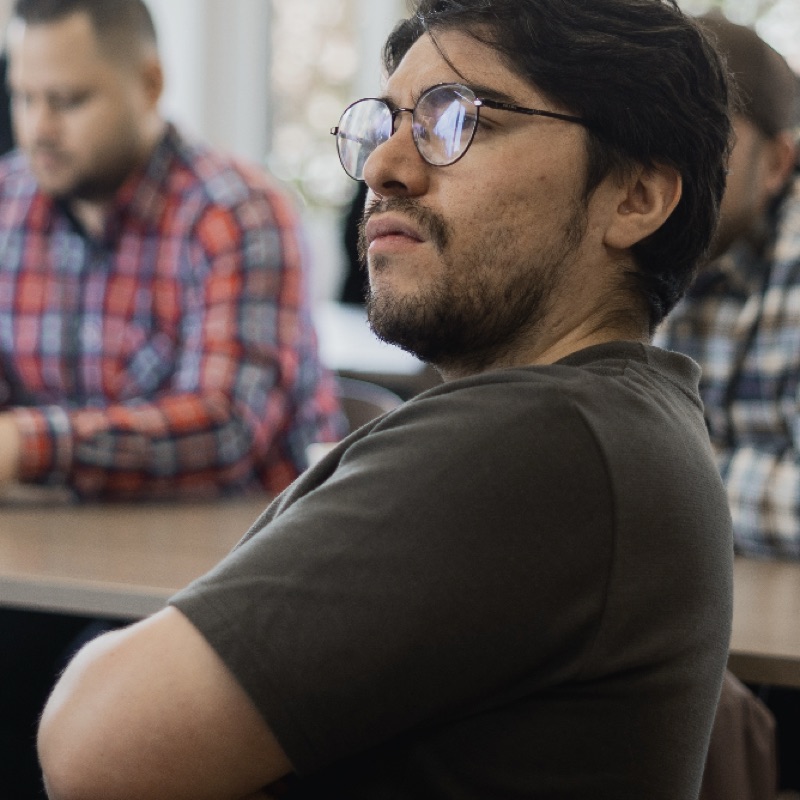
Camilo Sanchez
Senior Engineer
-

Jhoam Molina
Senior Engineer
-
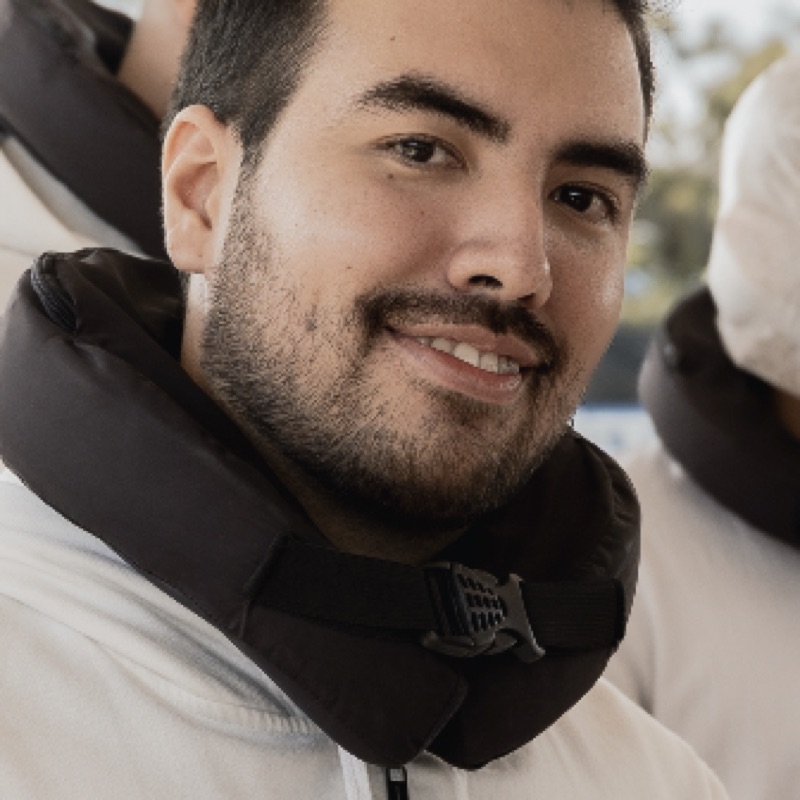
Andres Estupiñán
Senior Engineer
-

Daniel Pardo
Delivery Manager
-

Majo Ospina
UI/UX Product Designer
-

Juan Alvarez
QA Engineer
HOW WE HIRE
The bar is high because we cannot hide a weak hire behind a thick bench.
Because the senior engineer in the discovery call is the same person building your system, we cannot rely on a layer of junior engineers absorbing a mis-hire. The four steps below test different things, in this order. English fluency comes first because it gates everything else. Final calls go to the principals.
- 1
English fluency
A short conversation that tests whether English is a tool the candidate can actually work in, not a checkbox. Engagement language with US clients is English, in writing and on calls, without an interpreter layer. If that part is not solid, the rest of the process does not start.
- 2
Technical assessment with our CTO
A live screenshared working session with our CTO. We give the candidate an open-ended engineering problem and watch two things: how they think about the problem before they touch a keyboard, and how they use their tools (editor, AI assistant, references) to solve it. We are looking for taste and judgment, not memorized answers.
- 3
Culture fit
A conversation focused on the things craft alone does not surface: remote-work maturity, written communication, comms, the ability to push back constructively, and how someone handles ambiguity without a manager in the room. Our engagements run distributed across Colombia and with US clients, so this is load-bearing, not optional.
- 4
Final wrap-up interview
The closing conversation. Sometimes in person when we can arrange it, otherwise on video. Where we line up everything we have seen, ask the questions still open, and where the candidate gets to ask theirs. Final calls go to the principals, every time.
WHERE WE ARE
Colombia. Distributed across the country, aligned to US business hours.
We are not a one-office shop and we are not a remote-anywhere shop. We are a Colombian firm with engineers across the country, hired to a uniform culture-fit bar that includes remote-work maturity. Three things matter, stated plainly.
-
Colombia, not one city.
We hire across the country, not just out of one office. The firm was founded in Bogotá and that is still the center of gravity, but the team is distributed by design. The trade-off (less time in one room) is worth the trade-off we get back: a larger pool of senior engineers who would not relocate for the job.
-
US business hours by default.
Colombia is in the US Eastern time zone for most of the year. Reviews, escalations, and pairing sessions happen inside your working day, not across a 12-hour gap. West Coast hours are covered when the work needs it.
-
English fluency, hired for.
Every engineer passes an English-fluency conversation before any of the rest of the process starts. Discovery calls, working sessions, and written delivery happen in English without an interpreter layer.
RECEIPTS
You do not have to take our word for any of this.
Almost everything on this page is a claim we made about ourselves. Below are the surfaces where the same claims show up in a form you can verify without booking a call.
-
Clutch, verified 5.0 across reviews.
Every review on the profile is a verified client interview by Clutch staff. We do not write these. The clients do, and Clutch confirms it.
See Leanware on Clutch -
Case studies, with the outcome we actually measured.
Each published case study names the client, the engagement, the work that ran, and the outcome we can defend with the data we have. Cases that do not survive that test do not get a page.
See case studies -
Testimonials, named.
The people quoted on the testimonials page are named, with their company and role. No anonymized stock praise.
See testimonials
STILL CHECKING
Questions clients and candidates ask us.
A mix of the questions clients send before booking a call and the questions candidates ask before applying. Answers are written the way we would actually answer them on a call.
-
Where are you based, and why Colombia?
We are a Colombian firm. The company was founded in Bogotá in 2020 and that is still our center of gravity, but the team is distributed across the country. We are based in Colombia because the founders are from here, and because the time-zone overlap with US clients is genuinely excellent (Colombia sits in US Eastern time most of the year). We did not pick the country to be cheaper than other places. We picked it because it is where we live and where we can hire the people we want. -
How long have you been operating?
Since 2020. We are in our sixth year as of 2026. Most of the founding team is still on the engagements they were on in year one. Continuity is part of the value, and we are proud of it. -
What do you mean when you say you are AI-native?
We mean it as a structural claim, not a marketing label. Every engineer at the firm ships LLM-based features as part of their normal work. There is no specialist AI team you have to engage separately. The same engineer designs the prompts, picks the model, writes the eval harness, and ships the deterministic glue code around it. That is the bar we hire to. A firm that has an AI practice next to a non-AI practice is doing something different than what we are doing, and we are happy to explain the distinction on a call. -
How do you actually hire?
Four steps, in this order. First, an English fluency conversation, because engagement language with US clients is English without an interpreter and that has to be solid before anything else. Second, a live screenshared technical assessment with our CTO where we watch how a candidate thinks about an open-ended engineering problem and how they use their tools to solve it. Third, a culture-fit conversation covering remote-work maturity, written communication, and how someone handles ambiguity without a manager in the room. Fourth, a final wrap-up interview, sometimes in person, where the principals make the call. Each step is designed to catch a different kind of failure mode, which is why we cannot compress them. -
What kind of work do you say no to?
Enterprise procurement processes with layered account-management and RFP-shaped engagements. We are too small for that and the engagement shape works against the operating model we care about. Pure freelance staff-augmentation where the client wants hours, not outcomes. Pilots that are explicitly scoped to never reach production. We also say no when our discovery work shows you do not need us yet, which happens more than people expect. We would rather be the firm you come back to in twelve months than the one you regret in three. -
How is Leanware different from a consultancy or a staff-aug shop?
A consultancy understands business but typically hands the build to someone else. A staff-aug shop builds against the spec it was given but does not have an opinion on whether the spec is right. We try to be both jobs in one engagement: the same senior engineers run discovery, write the recommendation, and build the system. That sounds like everyone's pitch, so it is fair to ask how to tell. The structural check: the senior engineer on the discovery call is on the build kickoff, on the weekly reviews, and on the final acceptance call. If that is not true, the rest is positioning. -
If you are evaluating an AI development partner, what should you actually check?
Three things, in this order. First, ask who they will be working with after the contract starts, and check that the person on the discovery call is on that list. Second, ask how the firm hires engineers, and listen for a process with multiple distinct steps rather than a culture-fit interview and a handshake. Third, ask for a case study where the engagement did not go well, or where the outcome did not hit the original target, and listen for whether the firm can talk about it honestly. A firm that can answer the third question is usually one that can be trusted with the first two. -
Who runs Leanware?
The senior team is small and named. The page above lists the principals who carry firm-level decisions. The same people are involved in client engagements, not on a separate management track. You will meet most of them in the first few weeks of an engagement, and the principals run the final wrap-up interview for every engineer we hire. -
Are you hiring?
Almost always, for senior engineers with real AI fluency. We hire slowly and we hire one role at a time. The bar is described above. If that bar sounds like a place you want to work, send a note through the contact page; the same senior people who run engagements read these.
- CLUTCH VERIFIED 5.0 /5 Clutch rating, 26 verified reviews
- CLUTCH AWARD 2026 Named Top AI Agents Company
- 6 yrs Building software since 2020
- GMT-5 Bogotá · US-hours alignment
If any of this resonates, the next step is a 30-minute call.
The call is with one of the senior people listed above, who understand the business as well as the engineering. We will spend half of it understanding what you are working on, and the other half being honest about whether we are the right fit. No deck. No followup nurture sequence.
Tell us what you are working on. One of the senior people listed above will read it, and we will be honest about whether we are the right fit. No deck. No followup nurture sequence.